
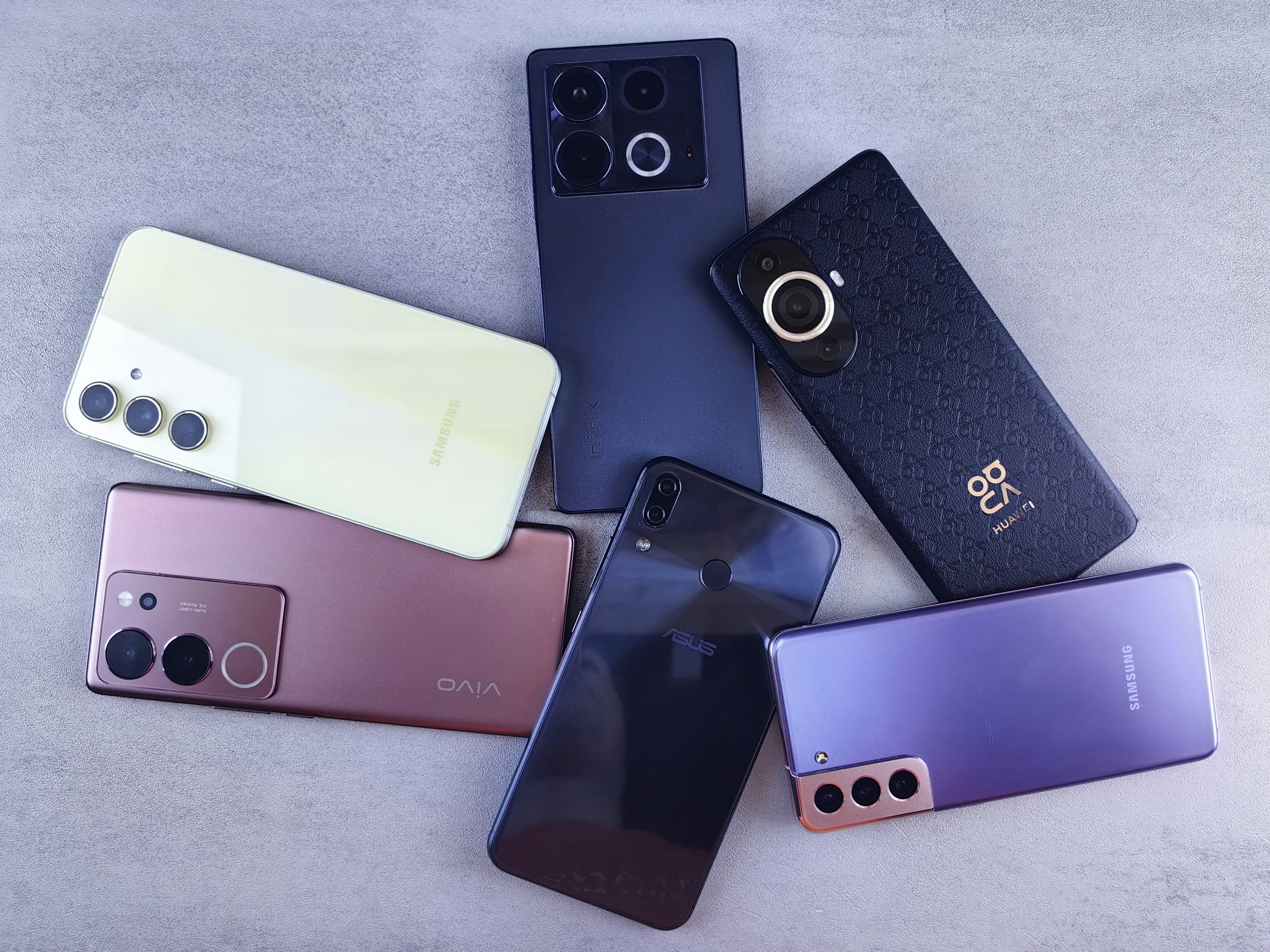
Budget Phone Cameras vs. Flagships: What the Sensor Specs Actually Explain
A 200MP budget phone camera and a 48MP flagship camera aren't competing on the same axis. Here's the physics the megapixel number hides.
The megapixel number that means less than it looks
A $180 budget phone can advertise a 200-megapixel main camera. A $1,000 flagship might list "only" 48 megapixels. On paper, the budget phone looks like it won. In practice, the flagship will produce visibly better photos in almost every condition except bright daylight — because megapixel count and actual image quality are governed by mostly different physics.
The simplest way to think about it: a camera sensor is like a pie. A 200-megapixel sensor and a 48-megapixel sensor can be cut into very different numbers of slices, but if the 200MP sensor's pie is physically much smaller, each of its 200 million slices is correspondingly tinier — and smaller slices (photosites) gather less light each, regardless of how many of them there are.
What sensor size actually looks like across price tiers
Physical sensor size is measured in a fraction-of-an-inch notation (1/1.3", 1", etc. — larger denominator means a smaller physical sensor), and it correlates closely with phone price tier:
| Price tier | Typical main sensor size |
|---|---|
| Budget (under $400) | 1/2.76" or smaller |
| Mid-range ($400–$900) | 1/1.95" to 1/1.56" |
| Flagship ($1,200+) | 1/1.3" to 1" |
A larger sensor area means each individual photosite — even before any binning — can physically be bigger, which directly improves low-light performance, reduces visible noise, and improves dynamic range (the sensor's ability to hold detail in both bright skies and dark shadows in the same shot).
Pixel binning: how a 108MP sensor becomes a 12MP photo, on purpose
Nearly every high-megapixel phone camera, budget and flagship alike, uses pixel binning: combining a cluster of adjacent small photosites — 4, 9, or 16 of them — into one larger "virtual" pixel for the final image. A concrete, real example: the Samsung Galaxy S25 Ultra's advertised 200-megapixel sensor defaults to a 12.5-megapixel output in normal shooting, combining 16 physical photosites into each final pixel to gather roughly 16 times more light per pixel than an unbinned shot would.
That's not a bug or a compromise being hidden from you — it's the correct, intentional way to use that sensor for most photos. Shooting at the full 200MP resolution is possible but generally requires a tripod, manual RAW capture, and heavy post-processing to be usable, which is why it's rarely how anyone actually shoots day to day.
When a spec sheet lists "200MP," that's the sensor's maximum physical resolution, not the resolution most photos will actually be captured at. Nearly all everyday shots from that same sensor are binned down to somewhere between 12MP and 50MP for better light-gathering per pixel.
Aperture: the other half of the light equation
Aperture — the size of the opening that lets light onto the sensor, written as an f-number like f/1.8 — is the other major factor, and it works in reverse of what the number suggests: a lower f-number means a wider opening, letting in more light. A phone with a f/1.4 aperture lets in meaningfully more light than one at f/1.9, independent of sensor size entirely. Flagship phones increasingly pair a larger sensor and a wider (lower f-number) aperture, which is why the gap compounds rather than just adding up.
The exception that proves the rule: same sensor, different phone
Sensor size and price don't move in perfect lockstep — a useful real-world exception is Google's Pixel 9a, a sub-$500 phone that uses the same main sensor and image signal processor as the significantly more expensive Pixel 10 Pro. It omits the telephoto and ultrawide lenses entirely, but for main-camera still photography — especially in daylight and controlled indoor lighting — it's been assessed as delivering roughly 90% of the flagship's still-image quality at a fraction of the price.
That's the real lesson underneath the sensor-size tables: the main camera's core hardware is where the biggest, most consistent quality gap lives, but manufacturers don't always allocate that hardware in strict proportion to overall phone price. Checking the specific main sensor model, when a manufacturer publishes it, can occasionally reveal a budget or mid-range phone punching well above its price tier.
Where a budget camera actually falls behind
Even accounting for the Pixel 9a-style exception, budget phones consistently lose ground to flagships in a few specific, physics-driven areas that no amount of software processing fully closes:
| Situation | Why budget hardware struggles |
|---|---|
| Low light / night shots | Smaller sensor + smaller aperture = less raw light captured before any software correction |
| Telephoto zoom past 3x | True optical zoom requires a periscope lens system that's expensive to miniaturize; budget phones mostly rely on digital cropping, which loses detail rapidly |
| Dynamic range in mixed lighting | Smaller sensors have less physical headroom to capture both bright and dark areas in one exposure |
| Video stabilization | Premium optical image stabilization (OIS) hardware is more consistently included on flagships; budget phones lean more on electronic (software) stabilization alone |
How to read a phone camera spec sheet
- Ignore the raw megapixel number as a quality signal. It tells you the sensor's maximum resolution, not how good typical photos will look.
- Look for the physical sensor size (often listed only in detailed spec sheets, not marketing pages) — bigger is better for light- gathering, independent of megapixels.
- Check the aperture f-number — lower means more light, all else equal.
- Treat zoom multipliers past 3x with skepticism unless the spec sheet specifically confirms a periscope/folded optical zoom lens rather than digital cropping.
- Remember pixel binning is normal, not a downgrade — a sensor advertised at a huge megapixel count that outputs smaller binned photos by default is working as intended.
Bottom line
The gap between a budget phone camera and a flagship one is real, but it's driven by physical sensor size and aperture, not by the megapixel number printed on the box — a fact both budget and flagship marketing tend to obscure, just in opposite directions. A budget phone's inflated megapixel count and a flagship's comparatively modest one are answering different marketing incentives, not different levels of engineering honesty, and the sensor-size and aperture figures underneath are where the real story is.